The LiT List
Glamping & Camping Ideas + Resources
The Ultimate Winter Camping Checklist (Free Printable)
Winter camping is quiet, crisp and beautiful. Campgrounds are empty, there are no bugs, and nothing beats waking up to fresh snow outside your tent. But cold weather is less forgiving than summer. Forget your warm socks in July and you're a little uncomfortable. Forget them in January and your whole trip can unravel.
We pulled together this checklist from years of camping in canvas tents and from the advice of cold-weather experts, from outdoor schools to park rangers. It's built for car camping and campground trips (the way most people start winter camping), with add-ons for hot tents and backcountry trips. Use the pro tips along the way. They're the small things that make the biggest difference.
Key Takeaways
Winter camping comes down to three things: stay dry, stay insulated from the ground, and stay fueled. Bring a sleeping bag rated for the low, two sleeping pads (or a pad plus cot), wool or synthetic layers (no cotton), extra food and fuel, and a way to keep water from freezing. Check the forecast and whether your campground is open, tell someone your plan, and know the signs of hypothermia and frostbite.
Jump to
- Before you go
- Vehicle and winter driving
- Shelter and campsite
- Sleep system
- Clothing and layers
- Kitchen, food and water
- Heat and fire
- Light and power
- Safety and first aid
- Hygiene and Leave No Trace
- Tools and repair
- Comfort and fun
- Kids and dogs
- Hot tent and backcountry add-ons
- Hypothermia and frostbite signs
- Your winter camp routine
- Printable checklist
- FAQ
Related: Hot Tent Camping Guide · How to Insulate a Canvas Tent · Bell Tents in the Snow · Shop 4 season tents
Before You Go: Planning Checklist
- ☐ Check the forecast for the overnight low, wind, snow and storms. Look for a calm, clear high-pressure window for your first trips, and be ready to postpone.
- ☐ Confirm your campground is open. Many close or reduce services in winter, and roads may not be plowed. Have a backup plan.
- ☐ Check fire restrictions and any rules about wood stoves or campfires.
- ☐ Check sunrise and sunset times. Winter days are short. Plan to arrive and set up camp with plenty of daylight left.
- ☐ Leave a trip plan with someone you trust: where you're going, who's with you and when you'll be back.
- ☐ Do a test run. Set up your tent and sleep system in the backyard or close to home first, so you can bail out if something isn't working.
- ☐ Check your gear. Test your stove, headlamps and CO alarm, and count tent poles and stakes before you pack.
- ☐ Start small. One or two nights at a drive-in site close to home is the perfect first trip.
Pro tip: Don't go alone on your first winter trips. The National Park Service notes that traveling in a group is safer, and it's easier to spot early signs of cold injury in each other than in yourself.
Vehicle and Winter Driving
- ☐ Winter tires or tire chains (and practice putting chains on at home)
- ☐ Snow shovel for digging out the car and clearing your site
- ☐ Ice scraper and snow brush
- ☐ Traction mats or kitty litter for getting unstuck
- ☐ Jumper cables or a jump starter. Cold weather is hard on car batteries.
- ☐ Full tank of gas and winter washer fluid
- ☐ Emergency blanket and extra warm layers in the car
- ☐ Road conditions checked before you leave
Pro tip: Leave a copy of your itinerary under your car seat as well as with a friend, so rescuers know your plan if they find your car.
Shelter and Campsite

- ☐ A tent built for winter. A 4-season tent or heavy canvas tent stands up to wind and snow better than a light 3-season tent. See our 4 season tents.
- ☐ Poles, plus a repair sleeve or spare pole set
- ☐ Stakes, plus extras: snow or sand stakes for soft snow, heavy-duty stakes for frozen ground
- ☐ Guy lines and spare cord
- ☐ Mallet and stake puller
- ☐ Footprint or ground tarp, like our bell tent footprints
- ☐ Rugs or foam floor tiles for an insulated floor. See our rugs and mats.
- ☐ Fly cover for extra protection from wind, rain and snow. See our fly covers.
- ☐ Soft broom or snow brush to clear snow off the roof
- ☐ Door mat or boot tray to keep snow and mud out
- ☐ Tarp for a windbreak or to keep gear dry while you set up
Picking your site: avoid valley bottoms, where cold air settles overnight, and exposed ridgetops, where the wind is strongest. Stay away from dead trees and branches heavy with snow. In snow, pack down a flat platform with your boots or snowshoes and let it set up before you pitch. Face the door away from the wind.
Pro tip: Snow on the roof gets heavy fast, especially on larger tents. Brush it off early and often. Read using a bell tent in the snow.
Sleep System
Your sleep system is the most important part of winter camping. Most of the cold you feel at night comes up from the ground, so insulation underneath you matters as much as your sleeping bag.
- ☐ Sleeping bag rated for the overnight low. Look for the comfort rating, not the lower limit. Under the EN/ISO standard, the comfort rating is where you can sleep relaxed, while the limit rating is for a curled-up sleeper just getting through the night. Many experts suggest a bag rated 10 to 20°F below the expected low.
- ☐ Two sleeping pads, or a pad plus a cot. Pair a closed-cell foam pad with an insulated air pad. R-values add together, so stacking pads adds warmth.
- ☐ Closed-cell foam under any air mattress. Air mattresses get cold because the air inside cools down.
- ☐ Sleeping bag liner for a few extra degrees of warmth
- ☐ Extra blankets, wool or fleece
- ☐ Pillow
- ☐ Dry clothes just for sleeping, including wool socks and a warm hat
- ☐ Hot water bottle: a sturdy, leak-proof bottle you can fill with hot water
- ☐ Heated blanket or mattress pad and a portable power station, if you're car camping. See heated blankets and portable power.
Pro tip: Down loses loft as it ages, gets dirty or stays compressed. If your sleeping bag is old, test it on a cold night at home before you trust it in the woods.
Clothing and Layers
The rule is simple: no cotton. Cotton holds moisture and loses its insulating value when wet. Wool and synthetics stay warm even when damp. Dress in layers you can add and remove, so you can cool down before you sweat.
Base layer
- ☐ Long underwear top and bottom (wool or synthetic)
- ☐ A spare base layer to change into if you get sweaty
Insulating layer
- ☐ Fleece or wool midlayer
- ☐ Puffy down or synthetic jacket
- ☐ Insulated pants or fleece pants
Outer layer
- ☐ Waterproof, windproof jacket
- ☐ Waterproof or snow pants
Hands, head and feet
- ☐ Warm hat or beanie
- ☐ Neck gaiter or balaclava
- ☐ Liner gloves, insulated gloves and mittens (mittens are warmest)
- ☐ A spare pair of gloves
- ☐ Wool socks, plus a dry pair saved for sleeping
- ☐ Waterproof insulated boots
- ☐ Gaiters for deep snow
- ☐ Camp booties or slippers for inside the tent
- ☐ Sunglasses or goggles
Pro tip: Snow reflects up to about 90% of UV light, so you can get sunburned and even snow-blind on a bright winter day. Wear sunglasses and sunscreen, and don't forget your lips, nose and ears.
Kitchen, Food and Water
Cooking
- ☐ Camp stove that works in the cold. Standard butane canisters struggle in freezing weather, and even isobutane blends fade below about 11°F, according to Backpacker. Propane stoves, like our GSI Pinnacle Pro 2-burner, and liquid-fuel stoves handle the cold much better.
- ☐ Extra fuel. Cold weather and melting snow use more fuel than you expect.
- ☐ Two ways to light it: lighters and waterproof matches. Cold lighters can fail, so keep one in an inside pocket.
- ☐ Pots, a kettle and a big pot for melting snow
- ☐ Cast iron pan or Dutch oven
- ☐ Utensils, plates, insulated mugs
- ☐ Vacuum-insulated bottle or thermos for hot drinks
- ☐ Cooler, to keep food from freezing solid (yes, really)
- ☐ Biodegradable soap, sponge and trash bags
- ☐ Windscreen for your stove
Food
- ☐ More food than usual. Your body burns extra calories staying warm.
- ☐ Hearty, easy dinners: one-pot stews, chili, soups and pasta
- ☐ Fat and protein: cheese, nuts, sausage and chocolate keep you warm for hours
- ☐ Hot drinks: cocoa, tea, cider, coffee and soup mixes
- ☐ A bedtime snack to fuel your body through the night
- ☐ An extra day's food, in case weather keeps you in camp
Water
- ☐ Wide-mouth bottles, which are harder to freeze shut
- ☐ Insulated bottles or sleeves
- ☐ Large insulated water jug at camp
- ☐ Water treatment, if you'll collect water or melt snow
Pro tip: Water freezes from the top down, so store bottles upside down to keep ice from sealing the lid. Skip hydration-pack hoses, which freeze quickly. At night, keep a bottle of hot water in your sleeping bag. You'll have liquid water in the morning, and a warm bed tonight.
Pro tip: Cold air is dry, and you lose a lot of water just breathing. Drink often, even when you don't feel thirsty. Cook dinner before dark, and never cook inside a tent unless it's designed for a stove.
Heat and Fire
- ☐ Firewood, bought locally: more than you think you need. Moving firewood can spread pests, and many parks restrict it.
- ☐ Kindling and fire starters, kept dry in a bag or bin
- ☐ Hand and foot warmers, disposable or rechargeable
- ☐ Camp chairs and blankets for sitting by the fire
- ☐ Fire extinguisher or water to put out the fire
Want real warmth inside your tent? A canvas tent with a wood stove changes winter camping completely. See the hot tent add-ons below and our hot tent camping guide. For quick warm-ups with a heater, only use indoor-rated models, with ventilation, and never while you sleep. Read can you use a propane heater in a tent?
Light and Power
- ☐ Headlamp for each person, plus spare batteries
- ☐ Battery lantern for the tent (no fuel-burning lanterns inside)
- ☐ String lights for a cozy tent and an easy-to-find camp
- ☐ Phone, charging cables and a power bank
- ☐ Portable power station for car camping, like our Jackery Explorer 1000 v2
Pro tip: Cold drains batteries fast. Keep your phone, headlamp and spare batteries in an inside pocket by day and in your sleeping bag at night. Winter nights are long, so plan on using your lights a lot more than in summer.
Safety and First Aid
- ☐ First aid kit, including blister care, burn gel and any personal medications
- ☐ Battery carbon monoxide (CO) alarm if you'll use any fuel-burning heater or stove
- ☐ Emergency space blanket
- ☐ Whistle
- ☐ Map and compass, and a way to navigate if snow covers the trail. Don't rely on your footprints to find camp.
- ☐ Satellite messenger or personal locator beacon if you'll be out of cell range
- ☐ Sunscreen and SPF lip balm
- ☐ Knowledge of hypothermia and frostbite signs (see below)
Hygiene and Leave No Trace
- ☐ Toilet paper, wipes and sealable bags
- ☐ Waste bags (like WAG bags) if there are no toilets. Frozen ground makes digging cat holes impractical, so Leave No Trace recommends packing out solid waste.
- ☐ Pee bottle, clearly labeled, so you don't have to leave your warm bag at 3 a.m.
- ☐ Hand sanitizer, toothbrush and toothpaste
- ☐ Lotion and lip balm for dry winter air
- ☐ Quick-dry towel
- ☐ Trash bags to pack everything out
Pro tip: Pick a "pee zone" away from camp, and collect snow for melting from a separate, clean spot. And pee before bed. Your body won't waste energy keeping that extra liquid warm all night.
Tools and Repair
- ☐ Knife or multi-tool
- ☐ Duct tape
- ☐ Repair kits for your tent, sleeping pad and stove
- ☐ Extra cord
- ☐ Zip ties
- ☐ Saw or hatchet, if fires are allowed and you'll process firewood
Comfort and Fun
- ☐ Camp chairs to get up off the snow, and a foam sit pad
- ☐ Small table
- ☐ Books, cards and games for long winter evenings
- ☐ Drying line for gloves and socks (well away from any stove)
- ☐ Sled, snowshoes or skis for daytime fun
- ☐ Camera (keep the battery warm)
Winter Camping With Kids and Dogs
With kids
- ☐ Extra clothes: kids get wet in the snow fast. Pack several changes of gloves and socks.
- ☐ Kid-sized warm sleeping bags and good pads
- ☐ Easy, mitten-friendly snacks and hot drinks in spill-proof mugs
- ☐ Headlamps or glow sticks for each child
- ☐ Sled and snow toys
- ☐ A backyard practice night first
With dogs
- ☐ Insulated dog bed or pad to keep them off the cold ground
- ☐ Dog coat and booties for short-coated or cold-sensitive dogs
- ☐ Paw balm for cracked pads
- ☐ Extra food and water. Dogs burn more calories in the cold too.
- ☐ Light-up collar for long, dark evenings
- ☐ Leash, and keep dogs off frozen lakes and ponds
Add-Ons for Your Trip Type
Hot tent add-ons (camping with a wood stove)
- ☐ Canvas tent with a stove jack, like our hot tents
- ☐ Wood stove, chimney pipe, triple wall section and spark arrestor
- ☐ Stove jack flashing kit and a fireproof stove mat
- ☐ CO alarm and fire extinguisher
- ☐ Heat-resistant gloves, poker and metal ash bucket
- ☐ Dry, seasoned firewood cut to fit your firebox
Get the full list in our hot tent camping checklist.
Backcountry add-ons (skiing or snowshoeing to camp)
- ☐ Snowshoes or skis, poles with snow baskets
- ☐ Pack or sled to haul gear
- ☐ Avalanche gear (beacon, probe and shovel) and training, if you'll be in or near avalanche terrain. Never camp below avalanche slopes.
- ☐ Traction devices like microspikes or crampons for icy trails
- ☐ Navigation and satellite communication
Know the Signs: Hypothermia and Frostbite
Hypothermia happens when your body loses heat faster than it can make it. The CDC lists these warning signs: shivering, exhaustion, confusion, fumbling hands, memory loss, slurred speech and drowsiness. Many campers remember the "umbles": someone who stumbles, mumbles, fumbles or grumbles may be getting too cold.
What to do: get the person into shelter, remove wet clothing, and warm them up with dry layers, blankets and a warm sleeping bag. Seek medical help.
Frostbite usually affects fingers, toes, ears, nose and cheeks. According to the CDC, redness or pain can be the first sign, followed by white or grayish-yellow skin, skin that feels unusually firm or waxy, and numbness.
What to do: get to warmth and seek medical care. Warm the area gently in warm (not hot) water. Don't rub or massage it, and don't warm it with a heating pad, heat lamp or fire, since numb skin burns easily.
Your Winter Camp Routine
When you arrive
- Arrive with plenty of daylight left.
- Pick a sheltered spot and pack down the snow.
- Pitch your tent tight and stake it well, door away from the wind.
- Set up your sleep system right away, so it's ready if the weather turns.
- Change out of sweaty layers into dry ones before you get cold.
In the evening
- Cook dinner before dark, and fill a thermos with hot water.
- Gather firewood and kindling for tonight and tomorrow morning.
- Bring boots, water bottles, fuel canisters and batteries inside so they don't freeze.
Before bed
- Eat a snack and have a warm drink.
- Pee.
- Change into dry sleep clothes, hat and socks.
- Fill a hot water bottle and tuck it into your sleeping bag.
- Put tomorrow's clothes, your phone and batteries in your sleeping bag.
- Crack a vent, and brush snow off the tent if it's snowing.
In the morning
- Get dressed inside your warm sleeping bag.
- Start the stove and make something hot.
- On sunny days, open up the tent and air out your bedding to dry out moisture.
- Before you pack up, make sure everything is dry, or dry your tent completely once you're home.
Printable Winter Camping Checklist
Want it on paper? Our free 4-page printable covers every item above, plus the camp routine and the signs of hypothermia and frostbite. Print it, stick it on the fridge and check things off as you pack.

Winter Camping FAQ
What do I need for winter camping?
The essentials are a sturdy tent, a sleeping bag rated for the overnight low, two sleeping pads (or a pad plus a cot), wool or synthetic layers, waterproof boots, gloves and a warm hat, a stove that works in the cold, extra food and fuel, a way to keep water from freezing, headlamps with spare batteries, and a first aid kit.
What temperature is too cold to camp in a tent?
There isn't a single number. It depends on your gear, experience, wind and how far you are from help. For your first trips, pick nights that stay within your sleeping bag's comfort rating, choose calm weather, and camp close to your car or home so you can bail out.
How do I stay warm at night when winter camping?
Insulate under you with two pads or a cot, use a sleeping bag rated for the low, change into dry clothes, eat a snack and drink something warm, pee before bed, and tuck a hot water bottle into your bag. A wood stove in a canvas hot tent makes evenings much warmer. More tips: how to insulate a canvas tent.
Can I use a regular tent for winter camping?
For mild winter weather, many 3-season tents work fine. For snow and strong wind, a 4-season tent or heavy canvas tent is safer, since wet snow can collapse a lightweight tent. Whatever you use, clear snow off the roof regularly.
How do I keep my water from freezing?
Use wide-mouth, insulated bottles, store them upside down, keep them close to your body during the day, and sleep with a bottle of hot water in your sleeping bag at night.
Is a propane stove better than butane in the cold?
Yes. Butane struggles below freezing, and isobutane blends fade below about 11°F. Propane and liquid-fuel stoves perform much better in cold weather. If you use canisters, keep them warm in your jacket or sleeping bag before cooking.
How many calories do you need when winter camping?
More than usual. Your body burns extra energy staying warm, and active winter trips can call for several thousand calories a day. Pack hearty meals, high-fat snacks, hot drinks and an extra day's food.
GEAR UP FOR WINTER



Related Resources
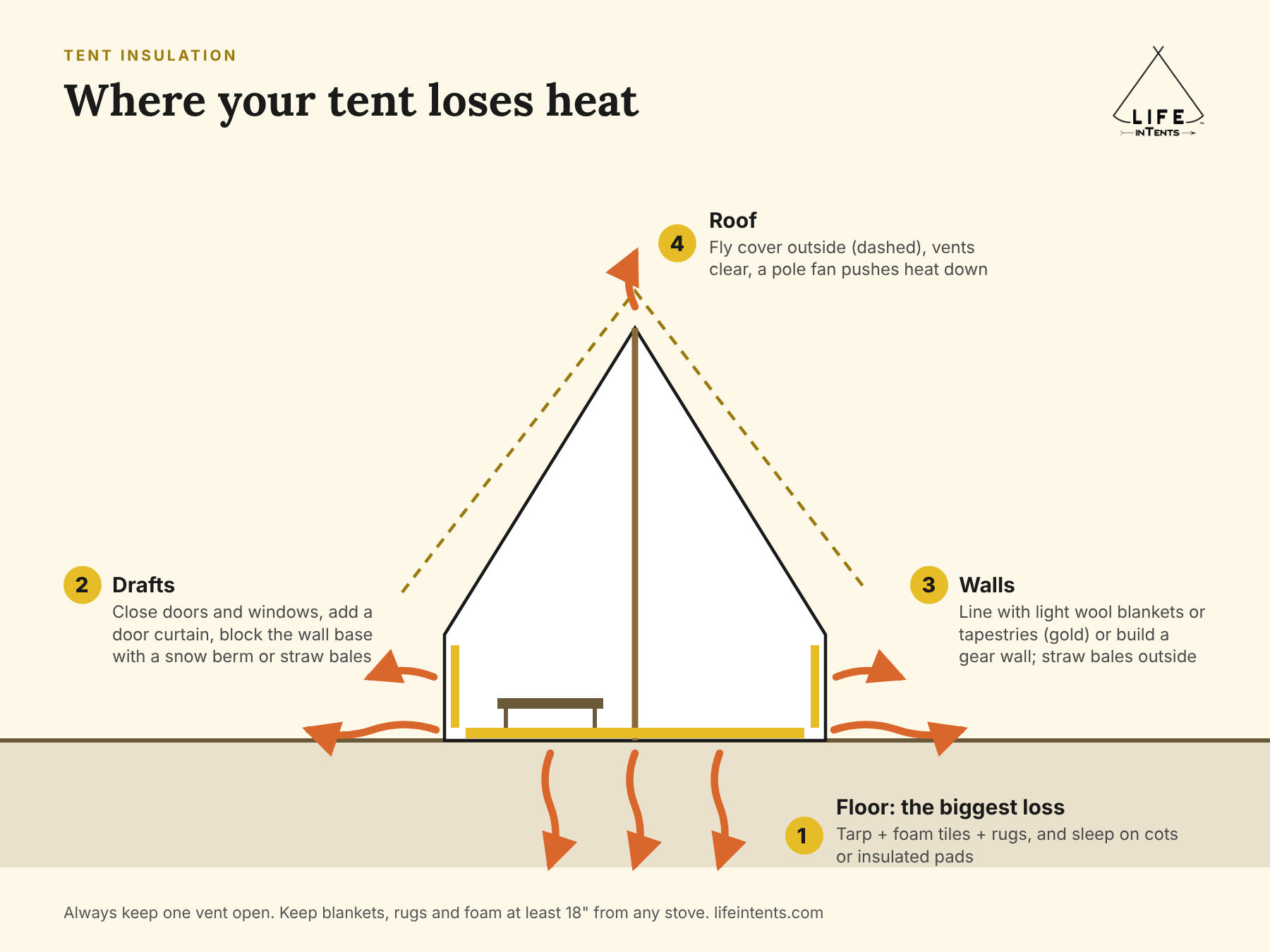
How to Insulate a Canvas Tent: Find Where Heat Escapes and Stop It
A canvas tent is a single layer of fabric between you and the weather. That's part of its charm: itA canvas tent loses heat through the floor, drafts, walls and roof. Here’s how to find each leak and fix it, with practical upgrades, a few creative tricks and the mistakes to avoid.
Hot Tent Camping: The Complete Beginner's Guide to Camping With a Wood Stove
There's nothing quite like stepping out of the snow and into a canvas tent warmed by a crackling wooHot tenting turns a canvas tent into a warm, dry basecamp with a real wood fire. Here's how to do it safely, from choosing a stove to your first night out, plus a printable gear checklist.